Stepan Vedunov

LLM drawing robot

In a three-week module we built a speech-to-drawing machine. You say what you want, and it draws a custom pen illustration for you to take home. It runs on GPT-3.5, Stable Diffusion and a plotter we built ourselves. The point was to explore new ways of interacting with natural language and AI models.

Team
David Polke, Elia Salerno, Andreas Kohler, Stepan Vedunov
Date
2023, three-week university module
Role
Human-robot interaction, voice UI, ZHdK
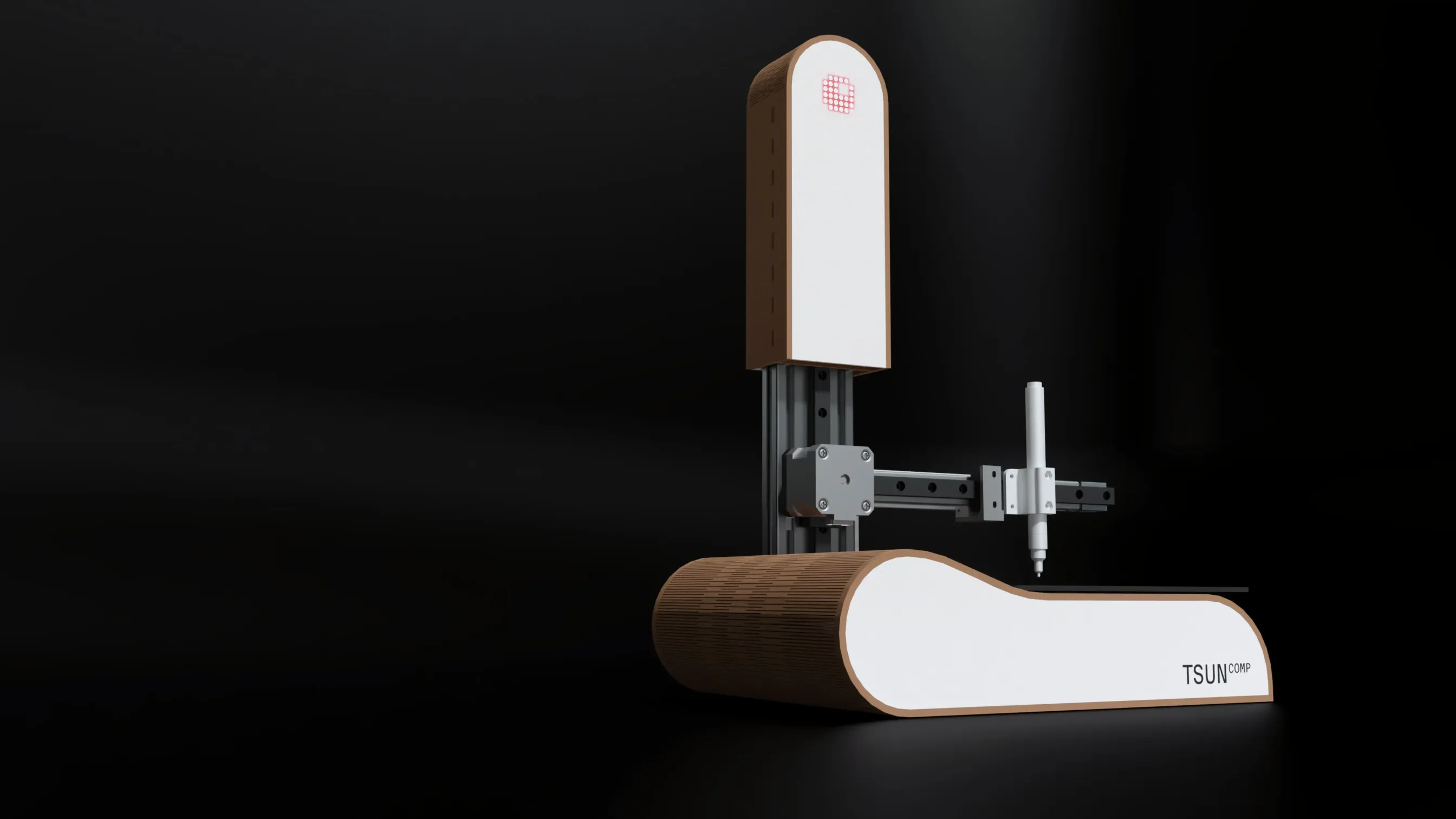
LLM drawing robot rendering

My role

  • User research on human-robot interaction.
  • Facilitated ideation rounds.
  • Designed and built the voice-input front end.
  • Industrial design of the robot.

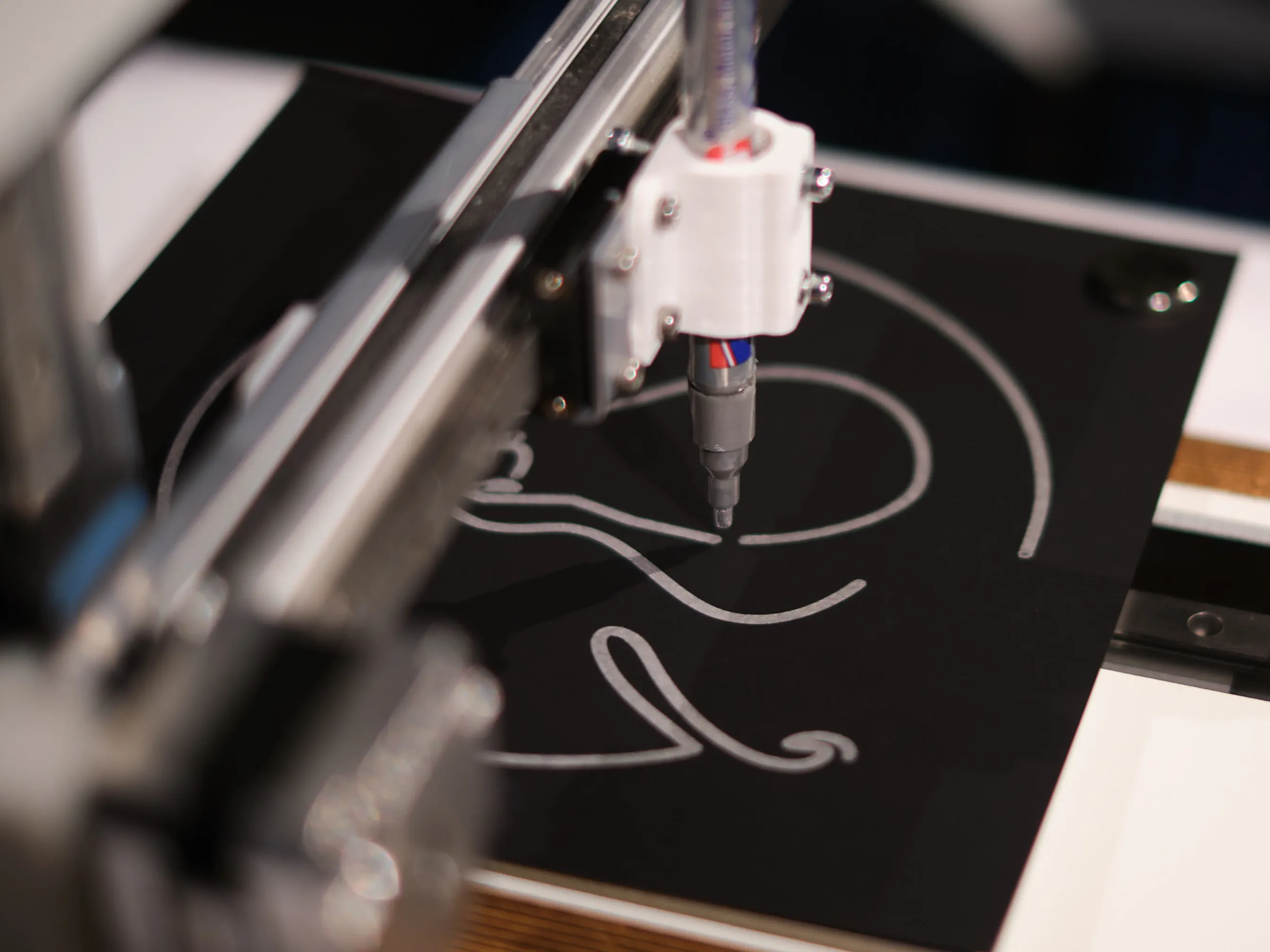
In action

Interacting with the robot. Plays from YouTube.

Process

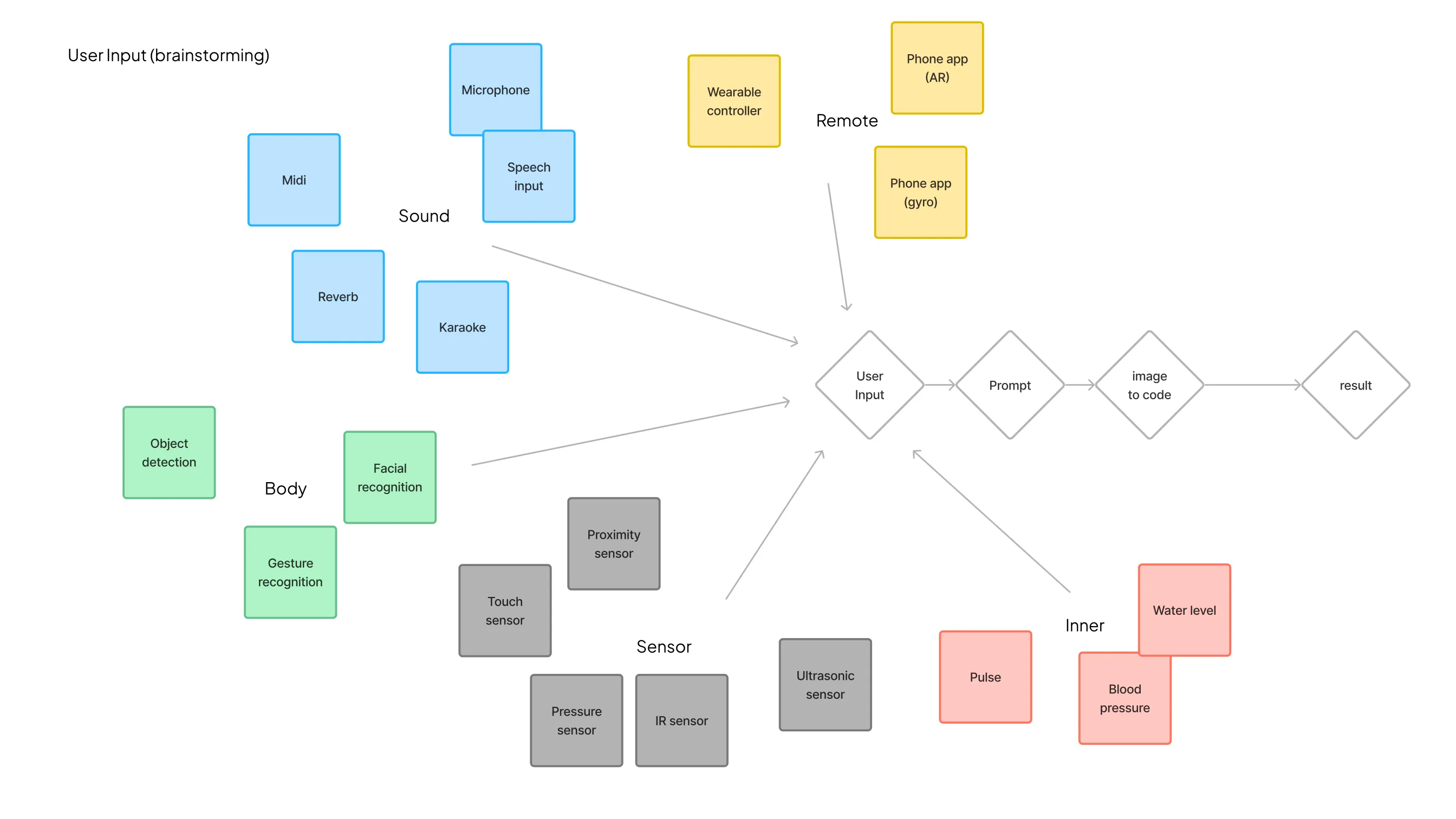
Brainstorm of possible input mechanisms
Brainstorming input mechanisms.
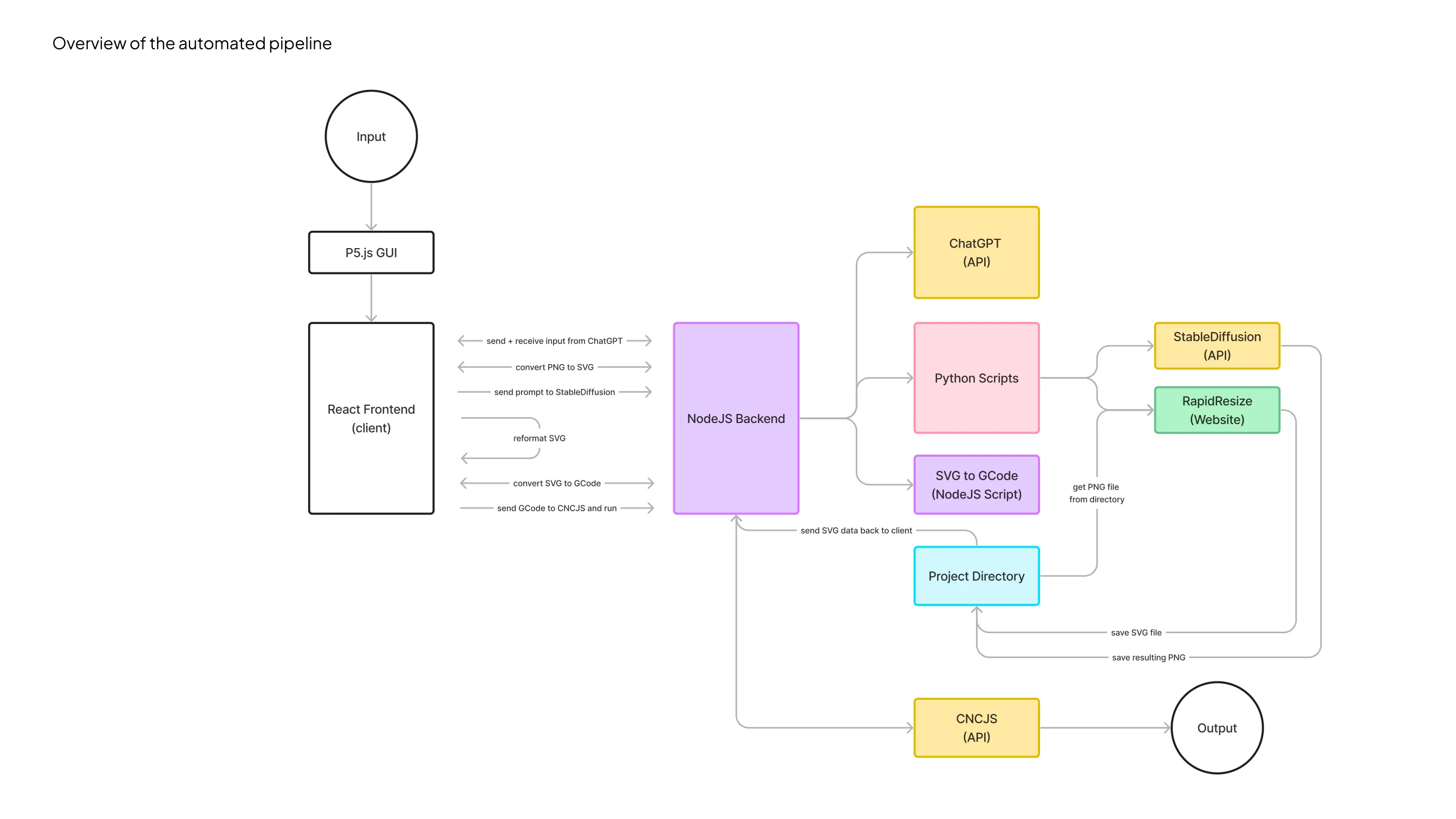
Technical pipeline from spoken input to the final drawing
The tech pipeline, from human input to the drawing.
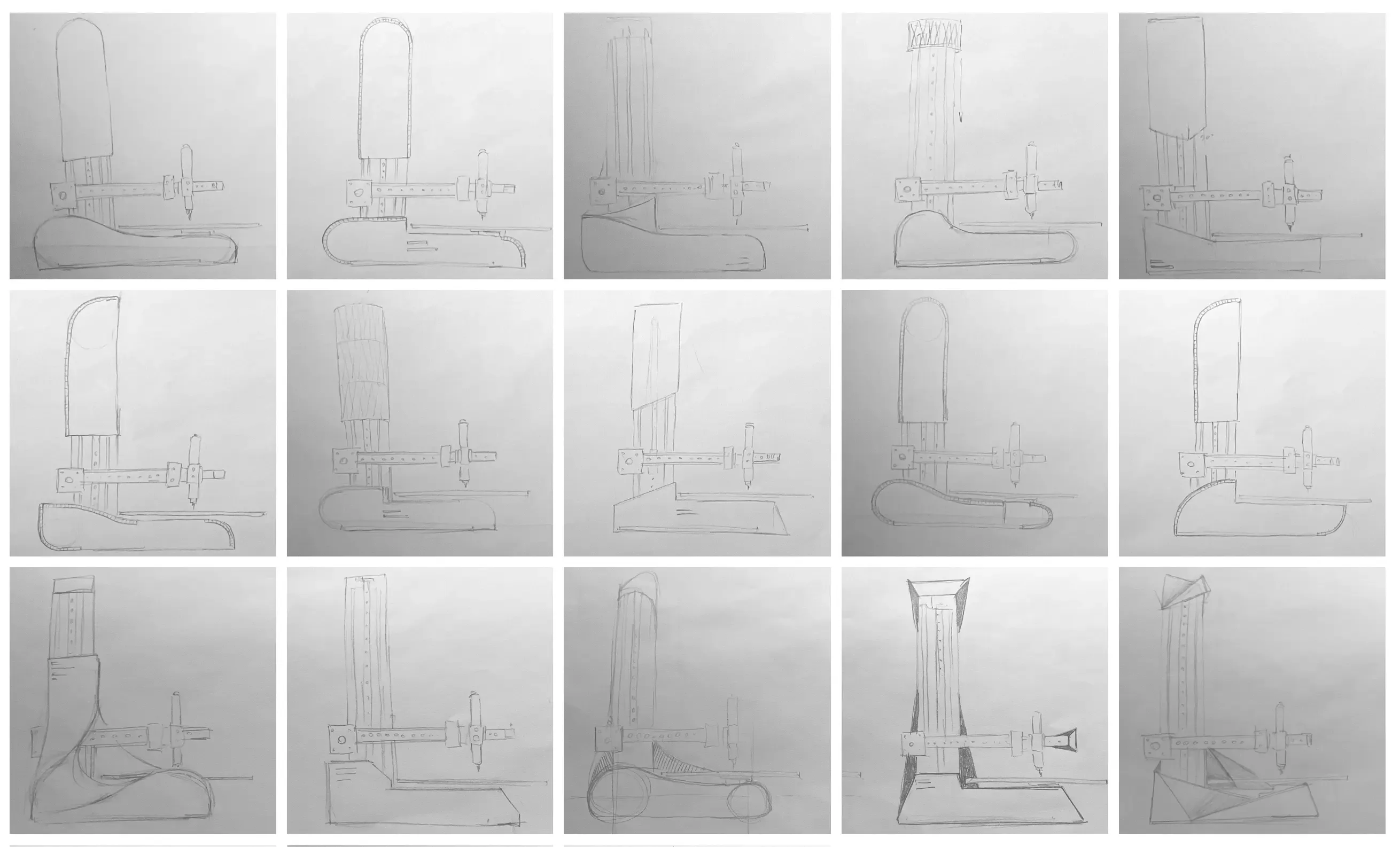
Sketches of possible industrial designs
Sketching versions of the industrial design.
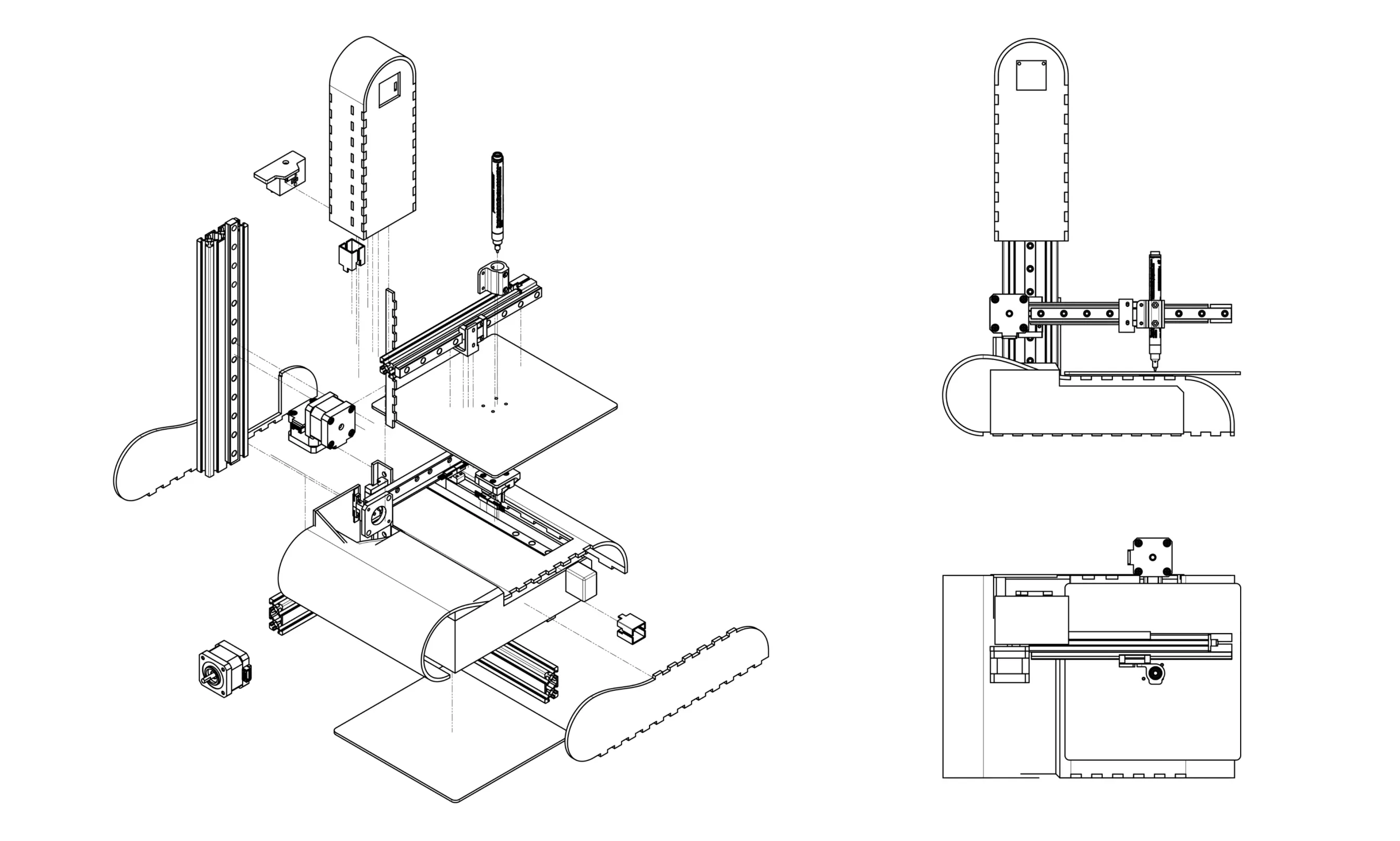
CAD assembly of the drawing robot
The CAD assembly.

Talking to it

The voice interface borrows from voice messages in chat apps, to make talking to it feel natural. It was central to the idea: replicate a sense of AI sentience through conversation.
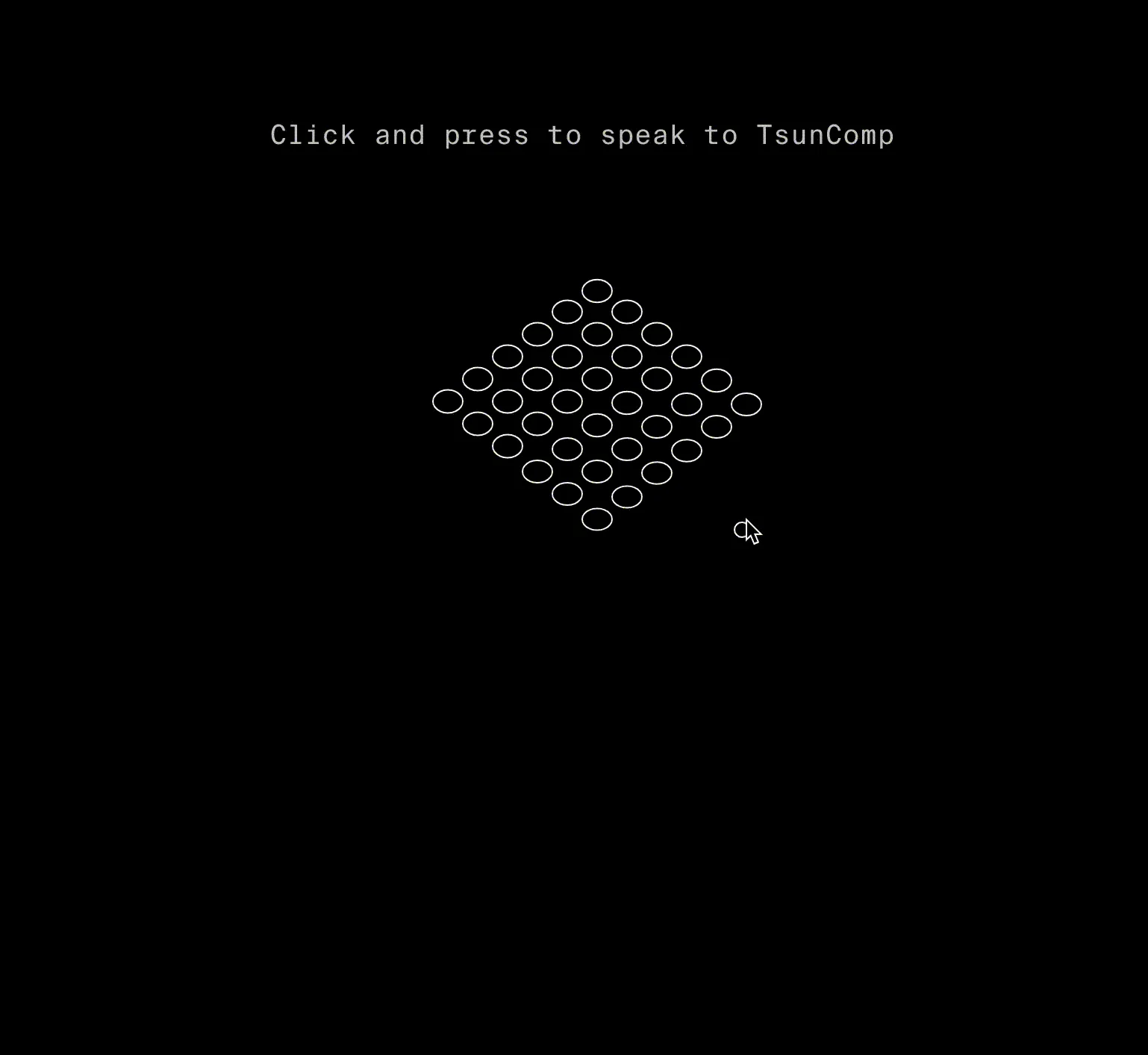
Animation of the speech-input interface
The speech-input interaction.

Result

Final 3D rendering of the robot
Final rendering of the robot.
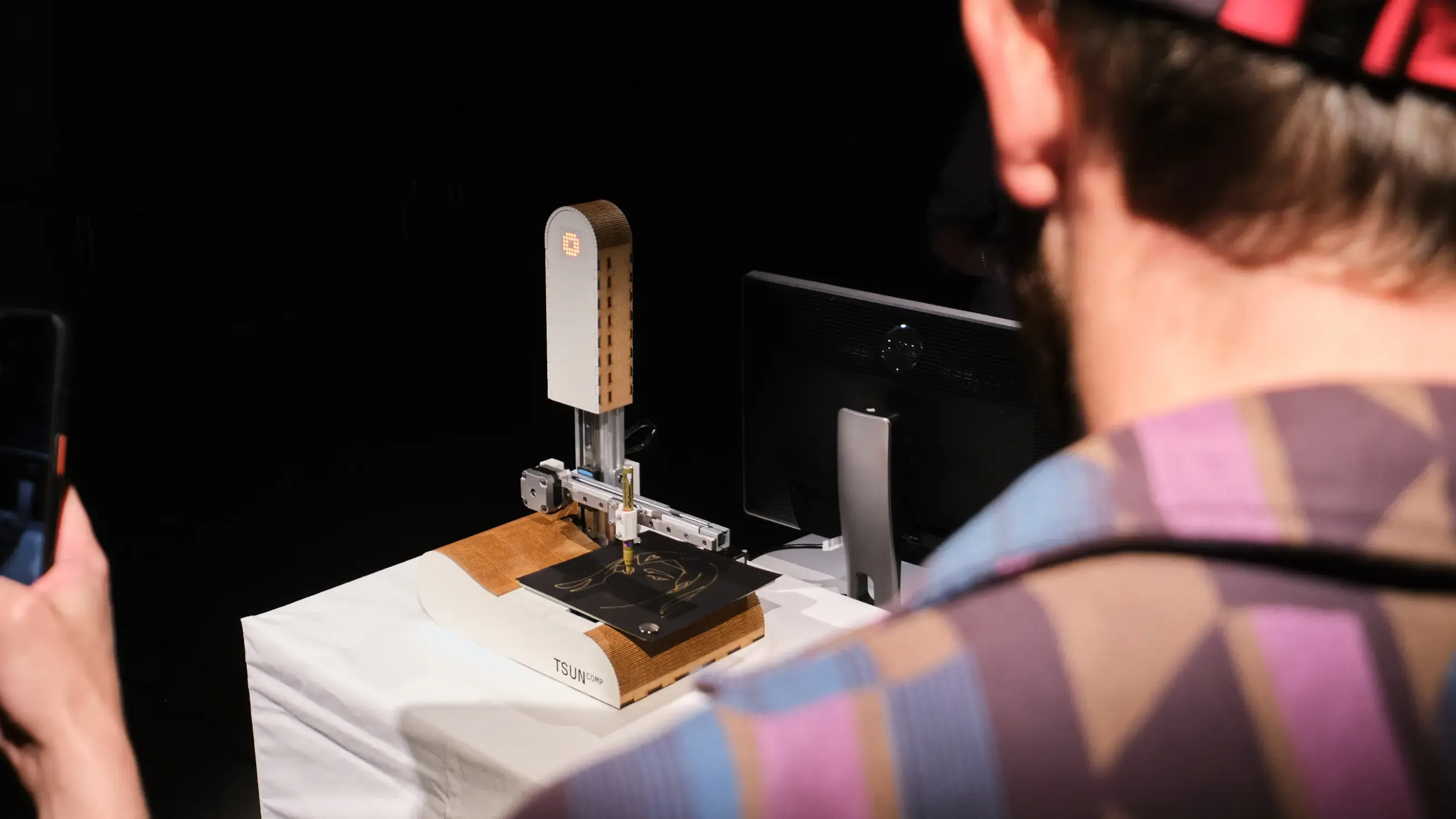
The robot at the project exhibition
At the exhibition.
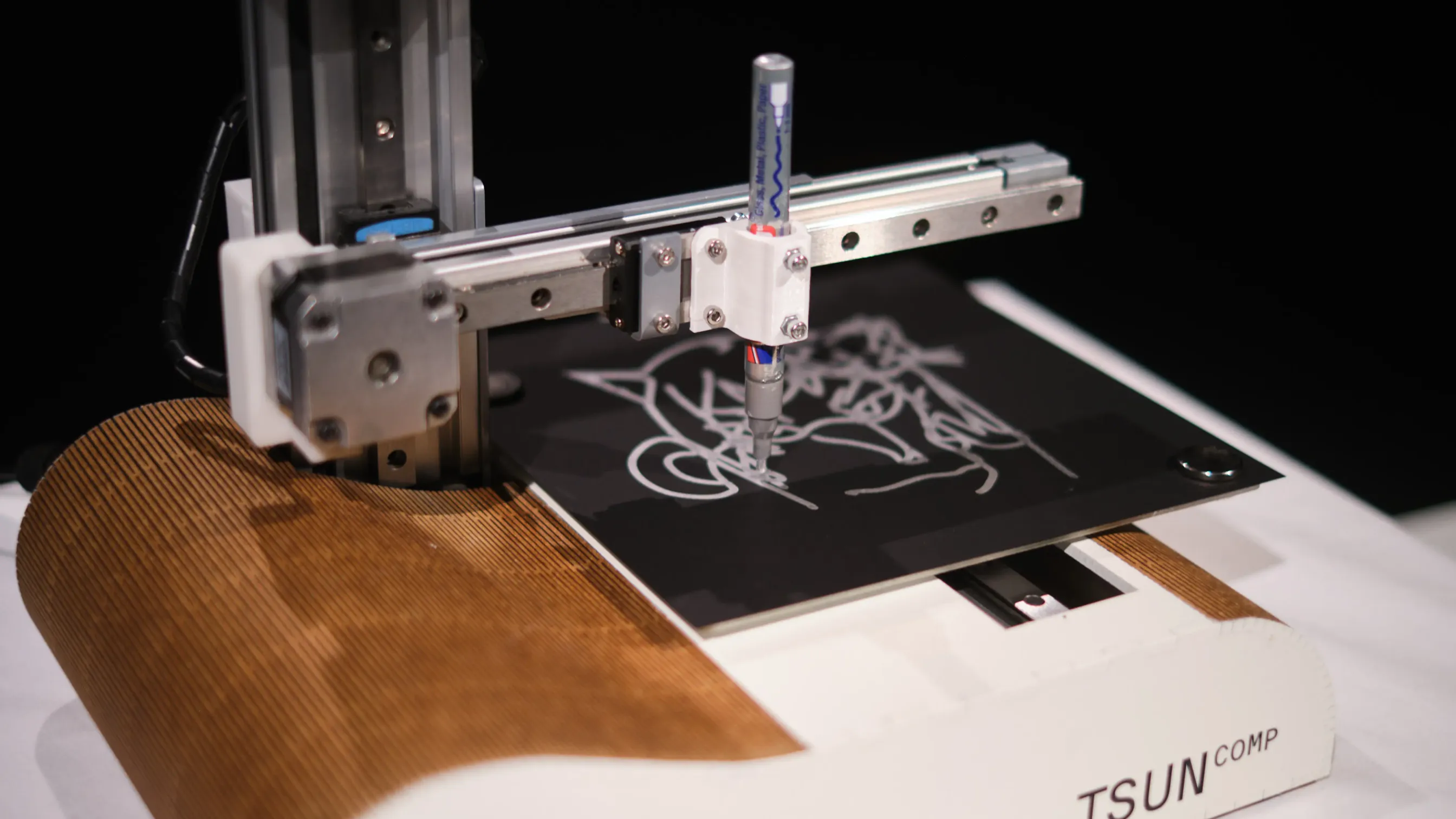
The robot drawing on paper
Drawing.

Outcome

The prototype is a speculative proof of concept for pseudo-sentience in AI. We wanted to learn about the field, and to shape how people interact with robotic systems.

vedunov.com setup utility

System
Nuxt 4, Vue 3 and Nuxt Content. Static pages on Netlify, no server, no tracking.
Languages
English and Swiss High German. Same pages, two content folders, /de in front of every address.
Tokens
Primitives → semantic tokens → components, compiled and contrast-checked on every build. The same pipeline I use at work.
Type
Inter and Geist Mono, self-hosted, swap. Titles are Inter set tighter, instead of a third font.
Signal
#E8540C on the side-project tiles and focus rings. The read-mode switch gets its own red-orange keycap, #E2421B.
Motion
Pages blur in and out, sections sharpen as you scroll, and neighbours step back when you hover. All of it stops with reduced motion.
Accessibility
WCAG 2.2 AA. axe: 0 issues on every page.
Performance
Lighthouse mobile, 24 pages: performance 94, accessibility 100, best practices 100, SEO 100 (lowest of each).
Keys
Delete opens this screen. Esc closes it.
last check 2026-11-09